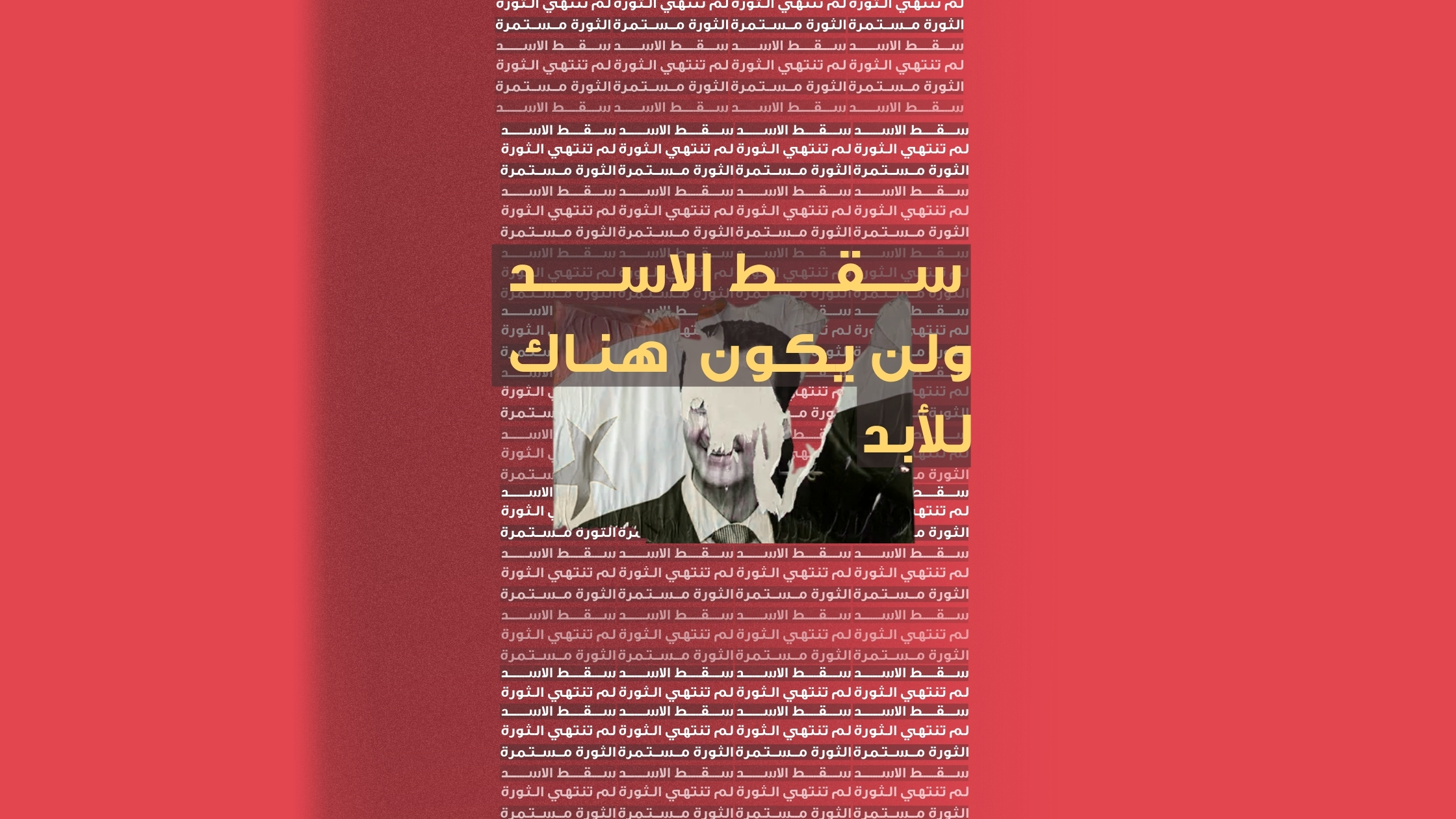
Commemorating Assad’s fall does not mean the revolution has ended. The Syrian revolution was—and remains—a revolt against an entire structure of repression, violence, discrimination, corruption, and the erasure of society.
The authorities in Damascus declared the revolution over, but this declaration came unilaterally, without societal participation, without any vision for a pluralistic Syria, and without a democratic or rights-based horizon. What unfolded was yet another attempt to monopolize the transitional phase and reconstitute the state through a closed, authoritarian model that reproduces counter-revolution.
Meanwhile, the fate of tens of thousands forcibly disappeared by the Assad regime over decades remains unknown, as the Damascus authorities dilute and obstruct processes of transitional justice, truth, and accountability.
The escalation of violations against Syrian society—including queer individuals—alongside intensifying forced displacement, reveals that authoritarianism is not only political, but also bodily, social, and sexual. The repression once exercised by the regime is now being reproduced by new authorities in different forms. The revolution continues because people’s bodies remain a battlefield.
Checkpoints, borders, and occupations.
No sovereignty.
No social contract.
No state in any meaningful sense.
And war profiteers are returning to the forefront.
Why does the revolution continue?
Because it was directed against a complete social, political, and economic system that still governs Syrians in different forms.
Because freedom has not been achieved.
Because justice has not been achieved.
Because people’s dignity remains violated.
Because the country remains divided, impoverished, occupied, and silenced.
What do we demand?
A radical, participatory transitional process—
one that excludes no one,
monopolizes no power,
and does not reproduce authoritarianism.
A process that places justice before politics,
people before the state,
and memory before reconciliation.
Link to video

.svg)



.png)